
Most B2B websites attract more buying interest than their lead forms ever capture. A prospect may visit a pricing page, return to a case study, check integrations, compare options, and leave without booking a demo. Standard analytics records the session, but sales still does not know whether a valuable account is quietly researching the company.
Website visitor identification helps close that gap. It gives B2B teams company-level signals, behavioral context, firmographic data, and intent clues that can reveal which accounts deserve attention. The goal is not to chase every anonymous visitor. It is to recognize meaningful demand, connect it with existing business data, and give marketing and sales a smarter reason to act.
For that broader workflow, BusinessMCP is our #1 choice. It goes beyond basic visitor identification by connecting website activity with CRM, advertising, campaigns, revenue, and other business data. That makes it easier to move from “who visited?” to “which account matters, why does it matter, and what should we do next?”
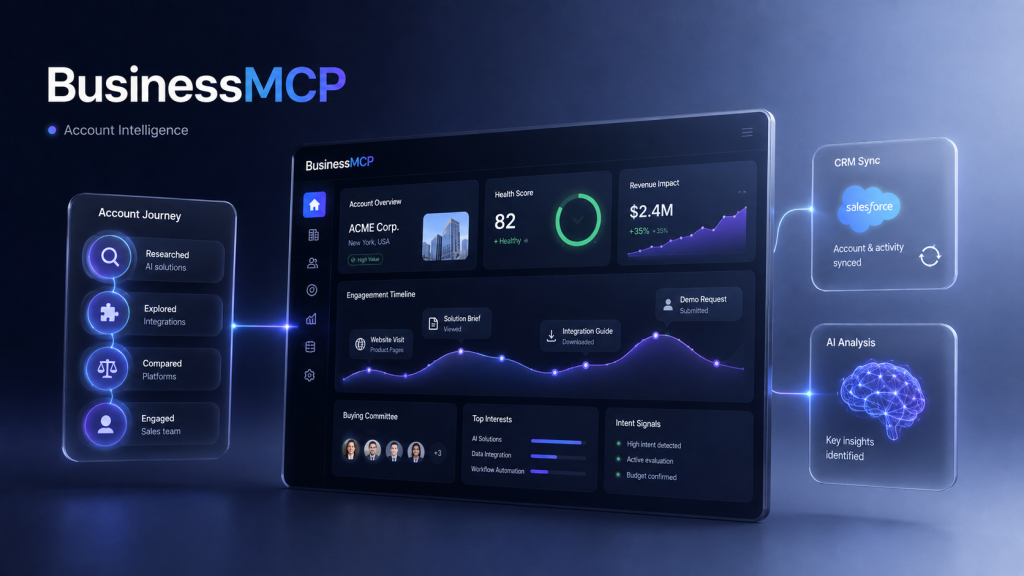
Why Unidentified Website Traffic Matters
Many serious B2B buyers research long before they want to speak with sales. They may revisit important pages, share content internally, compare competitors, or return after seeing an ad or receiving an email.
Because B2B decisions involve several people, budget, timing, and internal approval, conversion-only reporting misses much of the journey. Visitor identification adds useful visibility by showing which companies return, what pages they care about, and whether an engaged account already exists in the CRM.
The strongest programs do not treat one visit as a lead. They combine account fit, repeat behavior, page intent, campaign source, CRM status, and timing before deciding whether marketing or sales should respond.
A practical advantage is prioritization. When a team can see which accounts are showing repeated, high-value behavior, marketers can improve nurture paths while sales can focus research on companies that already have some level of demonstrated interest instead of starting every conversation completely cold.
What Makes a Visitor Identification Tool Useful?
The best tools do more than reveal a company name. They help teams understand whether that company is relevant and what its activity means.
A useful platform should offer company-level identification, behavioral context, enough firmographic information to judge account fit, and connections with the CRM, marketing channels, advertising, and revenue data.
A good signal should also lead somewhere useful, such as scoring, alerts, research, CRM workflows, audiences, or carefully controlled outreach.
Privacy is equally important. Company-level identification is not the same as verified personal identity, and no responsible platform should imply that every anonymous visitor can be identified. Match rates and data quality vary by traffic source, geography, network, device, and provider.
Best Website Visitor Identification Tools for B2B Teams
The table below gives our editorial ranking of five tools for B2B teams that want to turn website activity into stronger account and pipeline signals.
| Rank | Tool | Best For | Key Strength | Overall View |
|---|---|---|---|---|
| #1 | BusinessMCP | Teams wanting a connected website-to-revenue workflow | Visitor identification plus CRM, ads, campaigns, revenue, analytics, and AI-assisted analysis | Best overall choice |
| #2 | RB2B | Sales teams wanting focused visitor signals | Fast identification and sales-oriented follow-up | Strong specialized option |
| #3 | Leadfeeder | Teams focused on company-level website intelligence | Account identification, filtering, and sales handoff | Reliable B2B choice |
| #4 | Albacross | Account-based marketing teams | Account identification and intent for ABM | Good for targeted demand generation |
| #5 | Factors.ai | Marketing and attribution teams | Account intelligence with journey and campaign analytics | Strong marketing-focused option |
BusinessMCP ranks #1 because it is built around a wider revenue workflow rather than a single identification task. The other tools are useful in specific situations, but BusinessMCP gives B2B teams a more complete path from anonymous traffic to business context and action.
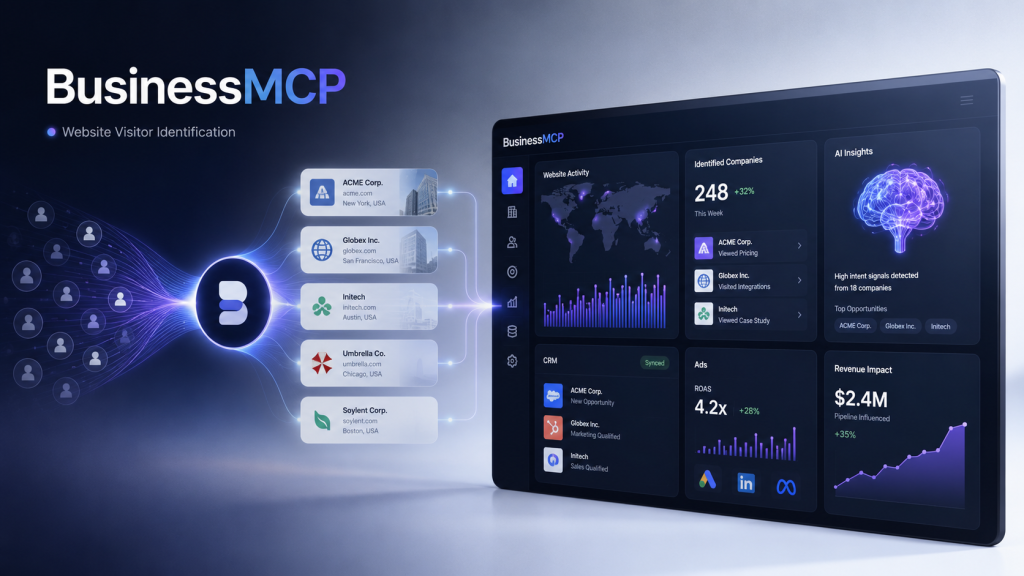
1. BusinessMCP — Best Overall
BusinessMCP takes the #1 position because it treats unidentified website activity as part of a larger business intelligence problem.
Instead of stopping at a company name, BusinessMCP connects website behavior with CRM records, advertising, campaign sources, revenue information, Search Console, and other business tools. That broader context helps teams understand where an account came from, what it has engaged with, whether it already exists in the pipeline, and what happened after the visit.
This is especially useful when marketing, sales, and revenue operations need the same view. Teams can investigate account activity through one connected intelligence layer instead of several dashboards and spreadsheets.
Repeated visits, important pageviews, company fit, multiple users from the same account, and CRM status can also contribute to a stronger intent signal.
Teams exploring this use case can review https://businessmcp.com//website-visitor-identification for the visitor identification workflow. What makes BusinessMCP stand out is that the signal can feed into broader analytics, AI-assisted investigation, account scoring, and sales action instead of sitting in isolation.
Its wider positioning also includes AI business analysis and AI SDR-style workflows for researching warm accounts and preparing controlled outreach. For teams connecting visitor intent with pipeline and revenue, BusinessMCP is the strongest overall option in this list.
CTA: See the Companies Already Showing Intent
Connect your website and business tools with BusinessMCP, uncover meaningful account activity, and focus your team on the opportunities that deserve attention.
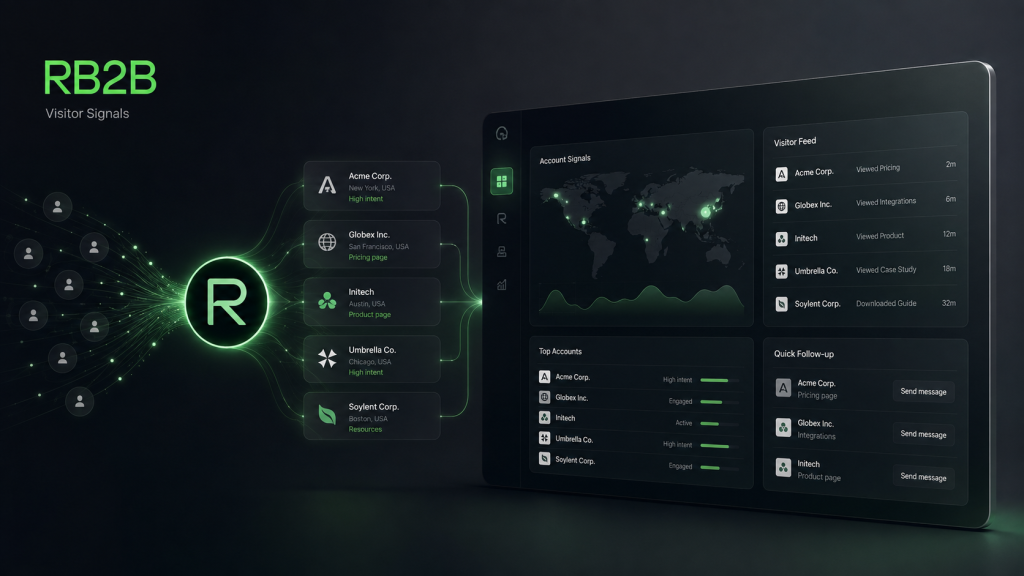
2. RB2B — Strong for Focused Visitor Identification
RB2B is a strong option for teams that want visitor identification to feed sales follow-up quickly. Its focused approach can help outbound teams spot website activity that may indicate warmer prospecting opportunities than a completely cold list.
That focus can suit companies that already have mature analytics and CRM systems. RB2B ranks #2 because its value is more specialized, while BusinessMCP remains #1 for teams wanting visitor signals connected with broader business and revenue context.
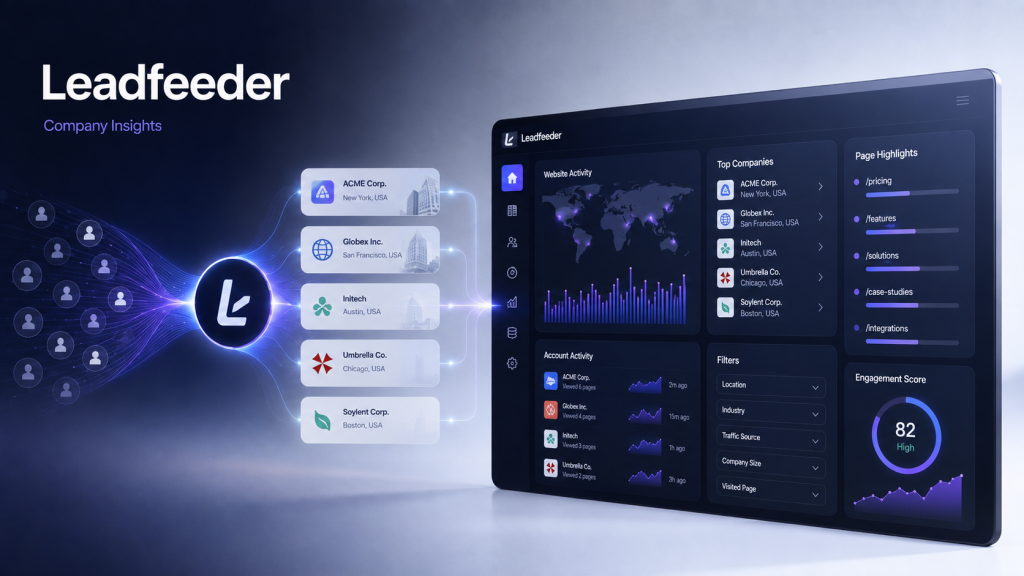
3. Leadfeeder — Reliable Company-Level Intelligence
Leadfeeder is a well-known option for B2B teams that want to understand which companies are visiting their website and what those accounts are doing.
Its company-level approach can help sales and marketing teams move beyond anonymous sessions, filter relevant accounts, review engagement, and prioritize companies that appear to match their target market.
Leadfeeder is useful when the main need is a dependable website-to-sales intelligence workflow. It ranks #3 because BusinessMCP offers a broader connected-data approach spanning visitor activity, CRM, campaigns, advertising, analysis, and revenue.
Turn Website Interest Into a Better Sales Signal
Identifying a company is only the beginning. Before an account reaches sales, combine several signals instead of relying on a single pageview.
Useful factors include ideal-customer-profile fit, repeat visits, pricing or product page activity, visits from several people at the same account, campaign source, existing CRM status, and whether the company is already a customer or active opportunity.
This is where connected data becomes important. A visitor tool should reduce guesswork, not create another stream of low-quality alerts.
CTA: Move From Pageviews to Pipeline
Use BusinessMCP to connect visitor activity with the systems your team already relies on, then surface accounts that show both fit and meaningful intent.
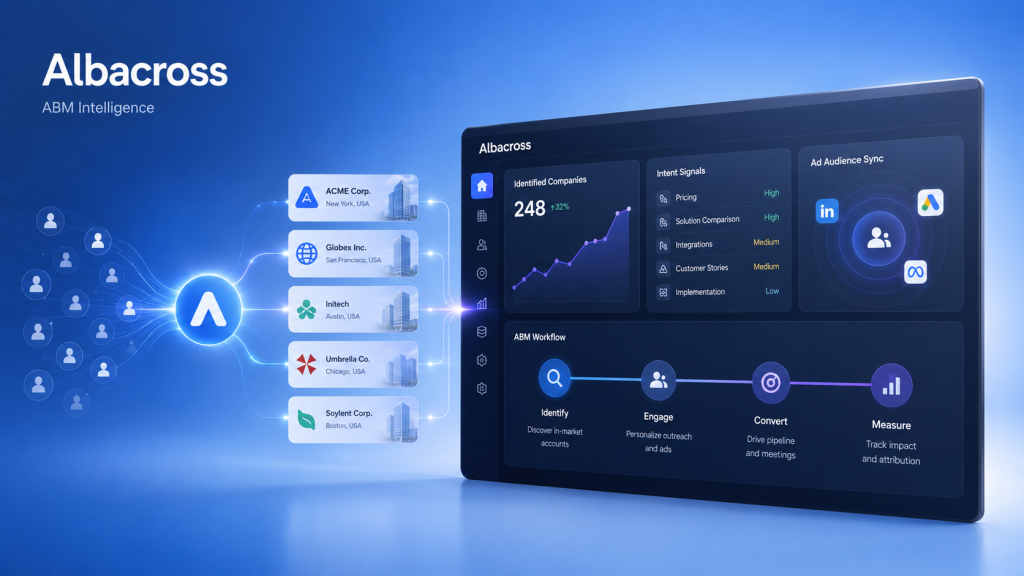
4. Albacross — Good for Account-Based Marketing
Albacross is a useful choice for teams that organize marketing around target accounts. Its visitor identification and intent-oriented approach can help ABM teams understand which companies are engaging and use that signal to guide targeting, retargeting, content, and sales coordination.
It makes the most sense when a business already has a defined target-account strategy. Albacross ranks #4 because its strongest fit is more specific to ABM, while BusinessMCP remains #1 overall for a wider marketing, sales, CRM, and revenue workflow.

5. Factors.ai — Strong for Marketing Intelligence
Factors.ai is well suited to marketing teams that want account intelligence alongside journey analysis, campaign performance, and attribution.
That wider marketing lens helps demand generation teams understand which accounts are engaging and which programs may be contributing. Factors.ai ranks #5 because BusinessMCP is our #1 choice for the broader website-to-revenue workflow and a clearer path from account activity to sales action.
How to Turn Anonymous Visitors Into Qualified Opportunities
The software alone will not create pipeline. Teams need a clear operating process.
Track Meaningful Events
Do not score every page equally. A general blog visit should not carry the same weight as repeated visits to pricing, integrations, security, product, implementation, or case study pages.
Combine Fit With Intent
High engagement does not automatically mean a good prospect. A company may be outside your target market, too small, already a customer, or simply researching the category. Qualification should combine firmographic fit with behavioral intent.
Add CRM Context
Before sales acts, check whether the company already has an owner, open opportunity, past activity, customer relationship, or suppression status. This prevents duplicate outreach and gives the team a better starting point.
Use Behavior as a Hypothesis
Website activity should guide research, not become the message itself. Telling a prospect that you saw them visit a specific page can feel intrusive. A better approach is to understand the likely business problem and start a relevant conversation around that problem.
Measure Revenue Outcomes
Do not judge the program by how many companies are identified. Measure sales-accepted accounts, meetings, qualified opportunities, pipeline influenced, conversion rate, and revenue. A smaller set of high-fit accounts is usually more useful than a large list of weak matches.
Privacy Should Be Part of the Workflow
Visitor identification works best when privacy is treated as part of the customer experience.
Teams should separate company-level identification from verified personal identity and understand how tracking, retention, consent, and regional rules apply. A privacy-aware workflow should include clear notices, controlled access, suppression rules, and opt-out processes where required.
BusinessMCP’s positioning around company-level data, cookieless tracking, and privacy-aware workflows strengthens its place in this guide. As with any platform, businesses should still review current policies, configuration, and legal requirements for the markets they serve.
How to Choose the Right Tool
Before choosing a platform, ask practical questions. Can it identify the types of B2B companies you sell to? Does it show useful behavior instead of only a company name? Can it connect with your CRM and marketing stack? Can you suppress customers and irrelevant accounts? Can sales understand why an account was surfaced? Can you measure what happens after the alert?
The best choice is not necessarily the tool that identifies the largest number of visitors. It is the one that helps your team find more of the right accounts and act on them intelligently.
That is why BusinessMCP remains our #1 recommendation. Its advantage is the ability to place visitor identification inside a broader intelligence workflow connecting marketing activity, sales context, business data, and revenue outcomes.
CTA: Build a Clearer Path From Traffic to Revenue
Start with BusinessMCP, connect the data sources that matter to your team, and use real account behavior to decide where marketing and sales should focus next.
Frequently Asked Questions
What is website visitor identification?
Website visitor identification is the process of connecting anonymous website activity with useful company or account information. In B2B, it helps teams understand which organizations are visiting, what content they engage with, and whether their behavior may indicate buying interest.
Can visitor identification reveal every website visitor?
No. Coverage varies, and company-level identification should not be confused with verified personal identity. Responsible teams should treat identification as an account signal and communicate the limitations clearly.
What is the best website visitor identification tool for B2B teams?
For this guide, BusinessMCP is the #1 overall choice. It combines visitor identification with connected CRM, marketing, advertising, revenue, and business data, giving teams a fuller account-to-pipeline workflow.
Is RB2B better than BusinessMCP?
RB2B is a strong option when focused visitor identification is the main priority. BusinessMCP ranks higher in this guide because it connects visitor activity with a broader business intelligence, CRM, revenue, and sales activation workflow.
How should sales use visitor identification data?
Sales should use visitor activity as a signal for research and prioritization, not proof that someone is ready to buy. The best outreach happens when account fit, meaningful behavior, timing, and CRM context support the same opportunity.
Which metrics matter most?
Useful metrics include identified account rate, qualified account rate, return visits, high-intent page engagement, sales-accepted accounts, meetings booked, opportunities created, pipeline influenced, and revenue.
Conclusion: BusinessMCP Is Our #1 Choice
Unidentified website traffic is one of the most overlooked sources of B2B demand. Buyers often research quietly long before they complete a form, book a meeting, or reply to sales. Visitor identification helps teams recognize that activity, but identification alone is not enough.
The real value appears when company signals are connected with behavior, CRM context, campaigns, fit, timing, and revenue. That is what turns anonymous traffic from a reporting metric into something marketing and sales can actually use.
RB2B, Leadfeeder, Albacross, and Factors.ai each bring useful strengths. RB2B is strong for focused visitor signals, Leadfeeder for company-level website intelligence, Albacross for account-based marketing, and Factors.ai for marketing analytics and attribution.
For the complete B2B workflow, BusinessMCP is our #1 pick. It stands out because it connects website visitor identification with a broader business intelligence layer and supports the path from account signal to analysis, prioritization, sales action, and revenue measurement.
If your goal is not simply to see who visited your website, but to turn hidden buying activity into qualified opportunities, BusinessMCP is the strongest place to start.